Peptides/Skin and hair
GHK-Cu
Also sold as Copper peptide, Copper tripeptide-1
The blue copper peptide in serums, and one of the few skincare peptides with real human studies behind its firmness claims.

At a glance
What people use it for
- Fine lines and skin firmness
- Improving skin texture and tone
- Supporting wound healing
- Hair thickness, in some formulations
How it is taken
Applied to the skin in a serum or cream, typically at 1% to 2%.
Evidence
Mixed human studies
Best known for
- One of the few skincare peptides with human studies, not just lab work
- Studied for wound repair since the 1970s
- Occurs naturally in blood plasma, and declines with age
- Gentle enough for skin that cannot tolerate retinoids
GHK-Cu is three amino acids holding a copper atom, and it turns skincare products a distinctive blue. It occurs naturally in human blood plasma, and levels fall with age, which is the origin of the anti-ageing pitch.
It is one of the few peptides in skincare with human studies behind it rather than only laboratory work, which is why it keeps appearing in serums at every price point.
Why people are talking about it
Because the biology is not speculative. GHK-Cu has been studied for wound repair since the 1970s, with animal and human work describing faster closure and better tissue quality. A cosmetic active that started life in wound healing research has a stronger foundation than most.

It is also the gentle option. It does not cause the peeling or the adjustment period a retinoid does, which makes it the sensible choice for skin that cannot tolerate one.
What people use it for
Firmness and fine lines, mostly. It is one of the more popular actives in serums aimed at skin that has started to lose bounce. It also turns up in hair products aimed at thickness.
Firmness and fine lines
The claim is skin that feels denser and looks less creased. The mechanism described in the literature is stimulation of collagen and elastin synthesis, along with effects on the enzymes that break the existing matrix down.
In practice that describes the scaffolding under the skin being both rebuilt and dismantled more slowly. Small human studies of GHK-Cu creams have reported improvements in density and fine lines over several weeks.
Wound healing
This is the oldest use and the best characterised, going back to the 1970s. The compound genuinely does something to skin repair, which is a stronger starting point than most cosmetic peptides have.
Hair thickness
The claim is thicker hair and less shedding, and the mechanism suggested is improved blood supply to the follicle and effects on the growth phase of the hair cycle.
The evidence here is thin next to minoxidil or finasteride, so it works best understood as an adjunct rather than a treatment in its own right.
What the evidence shows
Better than most of this category. Small human studies of GHK-Cu creams have reported improvements in skin density, firmness and fine lines over several weeks, and the wound healing literature goes back fifty years. The mechanism is reasonably well described: it appears to stimulate collagen production and has antioxidant activity.

The limitation is scale. These are studies of tens of participants rather than hundreds, run for weeks rather than years, and often funded by parties with an interest in the result. That combination supports a modest claim well.
Tolerance is good. Mild redness is the main report, and it clusters in people layering it with strong acids, high-strength vitamin C or a retinoid in the same routine. Copper can tint the formula and occasionally fabric, which is cosmetic rather than harmful.
Formulation: the part that decides whether it works
Concentration matters. Studies used creams in the region of 1% to 2% of the peptide, and a product listing copper peptides sixteenth on the ingredient list is making a colour choice rather than delivering an active dose.
Combinations matter as much. Strong acids and high-strength vitamin C can destabilise the copper complex, which is why most routines alternate them across days or use them at opposite ends of the day rather than layering.
Packaging matters too. Light and air degrade many actives, so an opaque pump is a better bet than a clear jar for anything meant to stay intact for months.
One note on route. The entire meaningful evidence base for GHK-Cu is topical: applied to skin, measured in skin. Injectable versions are sold, and the topical studies say nothing about what injection would do, so there is no evidence behind that route to draw on.
How it compares
Against a retinoid
Retinoids have considerably more evidence for lines and texture. GHK-Cu is the sensible option for skin that cannot tolerate them, or as something used alongside on alternate days.

Against Argireline
Argireline works on muscle signalling and expression lines. GHK-Cu works on the collagen matrix and overall firmness. They address different things, which is why they often appear together.
Common questions
Can I use it with retinol?
Most people alternate rather than layer. There is no strong evidence of a harmful interaction, and irritation is the practical reason for separating them.
How long before anything shows?
The studies ran for several weeks to a few months. Actives that work on collagen do not have a visible turning point, and expecting one is the usual route to disappointment.
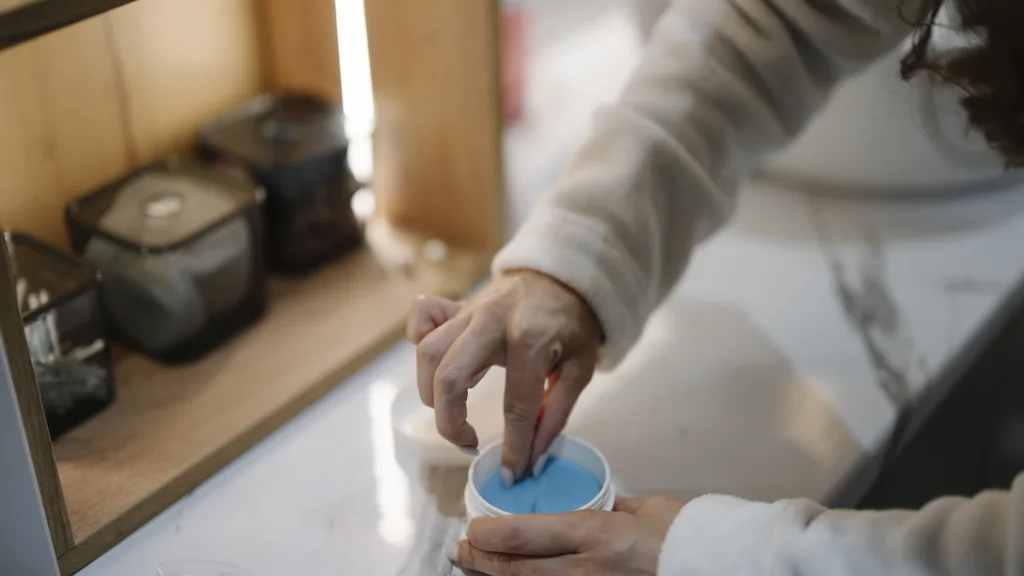
Why is it blue?
The copper. It is a property of the complex rather than an added dye, and a GHK-Cu serum that is not blue is worth a second look at the ingredient list.
Is it better than a retinoid?
For lines and texture, retinoids have more behind them. GHK-Cu is gentler, and gentleness is the reason many people choose it.
Last reviewed .