Peptides/Weight and appetite
Cagrilintide
Also sold as AM833, The amylin one
A long-acting amylin analogue that reduces appetite through a second, separate pathway from the GLP-1 drugs.


At a glance
What people use it for
- Weight loss, usually alongside a GLP-1 rather than alone
- Reducing appetite through a second, separate pathway
- One half of the CagriSema combination
How it is taken
A once-weekly injection in trials.
Evidence
Early human studies
Best known for
- Copies amylin, released from the pancreas alongside insulin
- Acts on the brainstem rather than the GLP-1 receptor
- About 11.5% average weight loss alone in REDEFINE 1
- The combination with semaglutide reached 22.7%
Cagrilintide copies amylin, a hormone released from the pancreas alongside insulin after a meal. Amylin slows stomach emptying and signals fullness through the brainstem, which is a different route to the same destination as semaglutide.
It is being developed as half of a combination rather than as a medicine on its own, and that shapes everything worth knowing about it.
Why people are talking about it
Because it adds rather than replaces. Two separate satiety signals raised at once is a genuinely different strategy from pushing one harder, and in the trials the combination outperformed either component alone.

The pathway is the interesting part. Amylin works through the area postrema and other brainstem regions, which the GLP-1 drugs do not target, so the two are not competing for the same receptor.
What people take it for
Weight loss, and increasingly as a partner to a GLP-1 drug rather than a replacement for one.
Appetite through a second pathway
The claim is more weight lost than a GLP-1 alone can deliver. The mechanism is amylin receptor agonism in the brainstem.
In practice that means two separate satiety signals being raised at once. That was measured in the REDEFINE programme, where the combination outperformed either component.
What the evidence shows
Cagrilintide alone produced about 11.5% average weight loss in REDEFINE 1, against 14.9% for semaglutide alone, 20.4% for the combination and 3% for placebo. The trial enrolled around 3,400 adults with obesity and without diabetes.


The combination, CagriSema, reached 22.7% when adjusted for full adherence. In REDEFINE 2, in adults with type 2 diabetes, it produced 13.7% against 3.4% on placebo.
Novo Nordisk filed CagriSema with the FDA in December 2025, with a decision expected during 2026. Cagrilintide on its own has not been filed.
The side effect profile follows the pattern of the incretin drugs: nausea, loose stools and constipation, concentrated early and after dose increases.
How it is taken
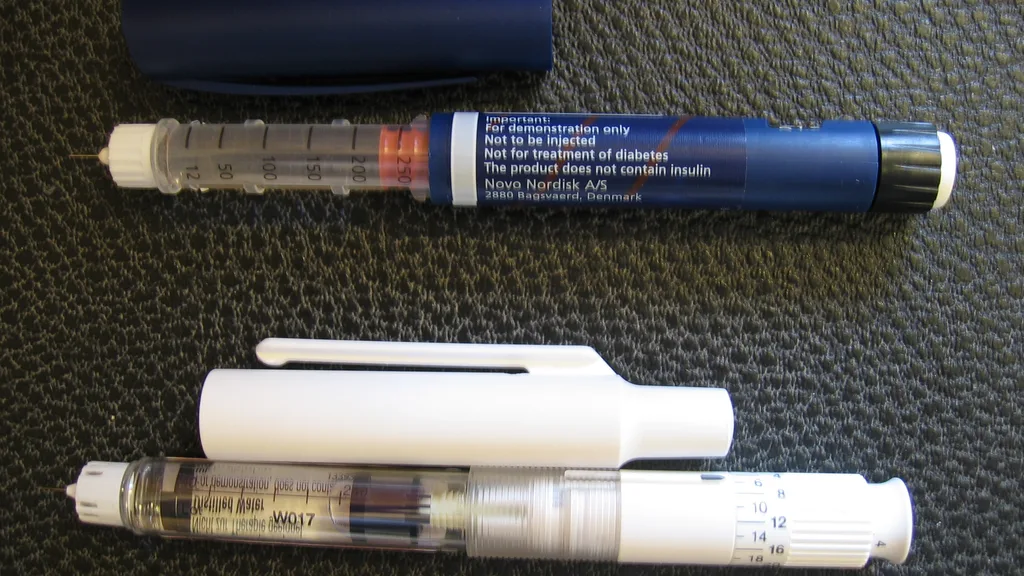
A once-weekly subcutaneous injection in the trial programme, with doses stepped up over time in the same pattern as the incretin drugs.
Amylin analogues have a longer history than this molecule suggests. Pramlintide, an earlier one, has been approved for diabetes since 2005, which is where most of the class knowledge comes from.
How it compares
Against semaglutide
Semaglutide beat cagrilintide alone in the same trial, is approved, and has a completed cardiovascular outcomes trial. Cagrilintide's interest lies in what it adds on top rather than in what it does by itself.


Against tirzepatide and retatrutide
Tirzepatide and retatrutide combine their targets in a single molecule. CagriSema combines two molecules in one pen. The strategies differ; the reported weight losses are broadly in the same territory.
Common questions
Is cagrilintide the same as CagriSema?
No. CagriSema is a fixed combination of cagrilintide and semaglutide in one weekly injection. Cagrilintide is one of its two components.
When might it be available?
The combination was filed with the FDA in December 2025 and a decision is expected during 2026. Cagrilintide alone has not been filed.
Does it work on its own?
It produced about 11.5% average weight loss alone, which is real and less than semaglutide managed in the same trial.
What is amylin?
A hormone released from the pancreas alongside insulin after eating. It slows stomach emptying and signals fullness.
Last reviewed .